


Scan the QR-Code to Follow our WeChat Official
Account to Get the Latest News
Project address:Peizhao, Xuanpei Village, Dongqiao Town, Haishu District, Ningbo City, Zhejiang Province, China Ningbo Mingzhou Environmental Energy Co.
Appointment visit contact phone number:+86 0574-83069181-8402
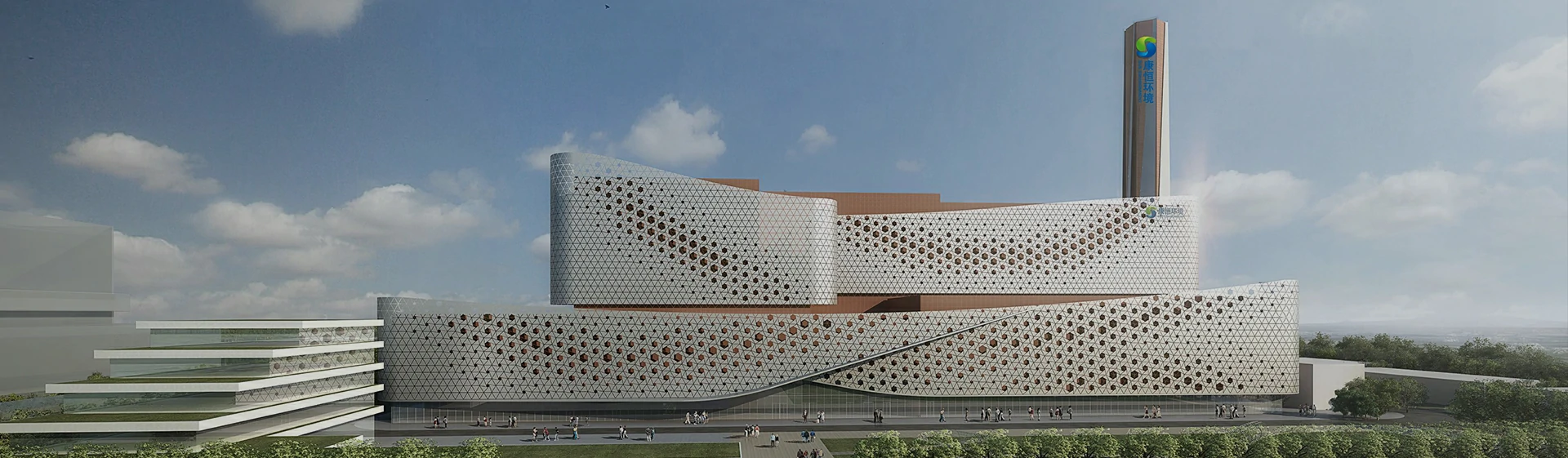
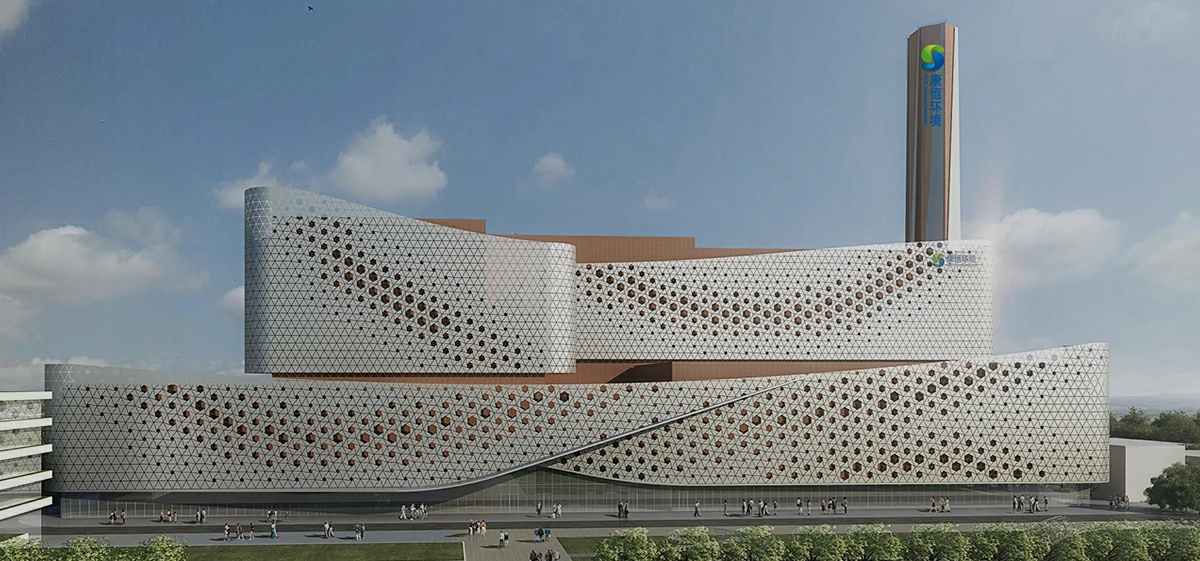
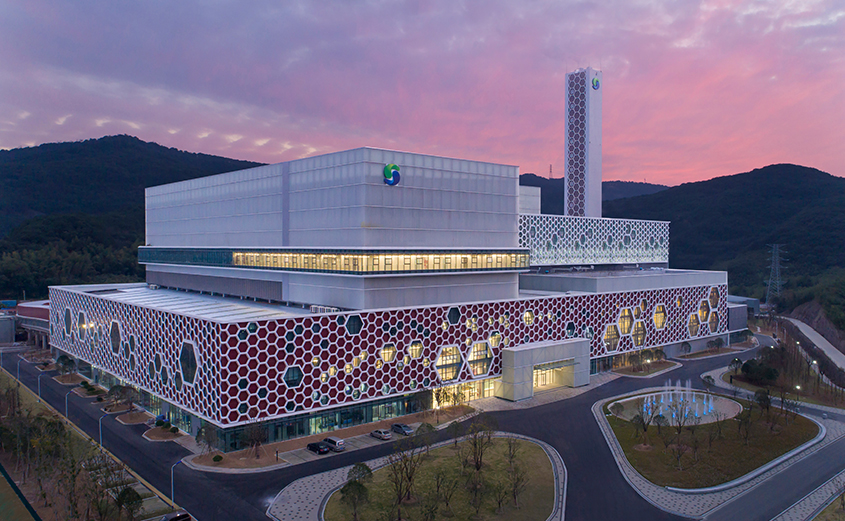
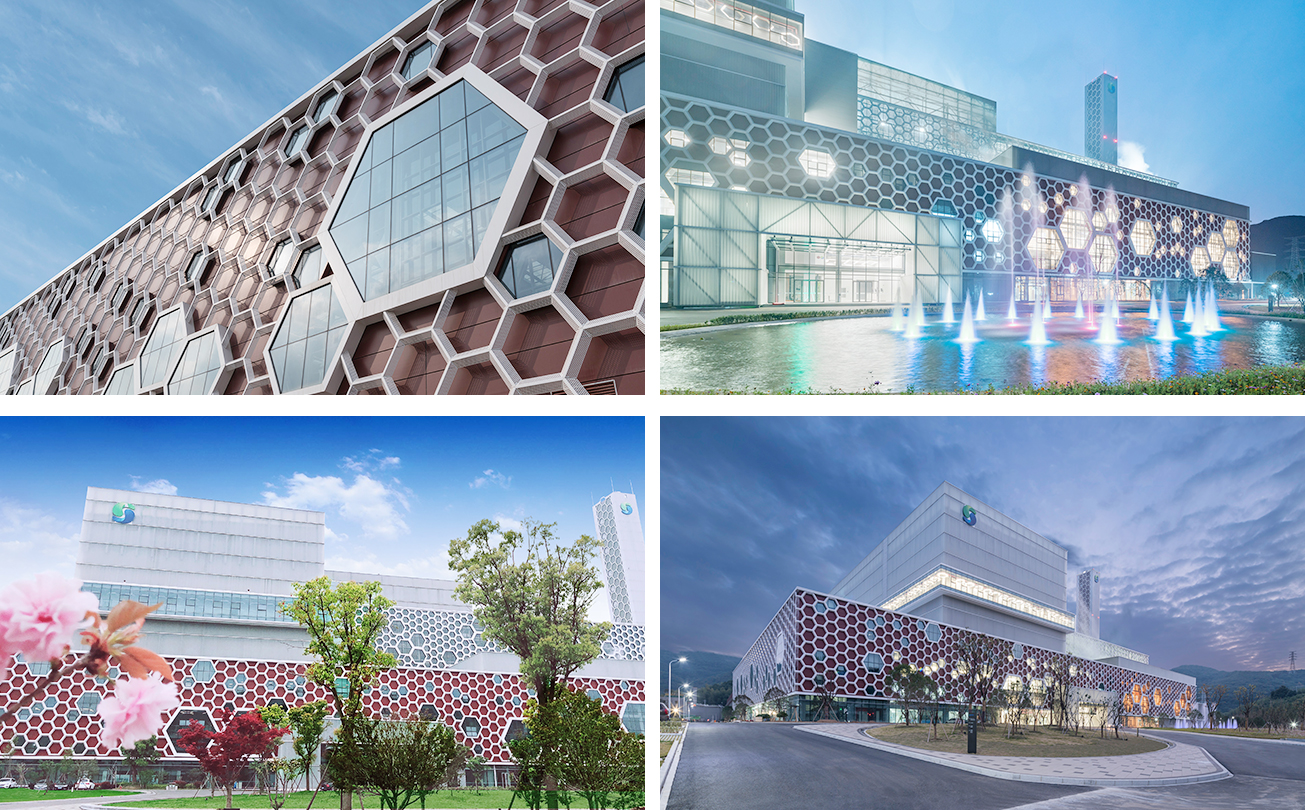
The Ningbo Municipal Solid Waste Incineration Power Generation Project is located in Dongqiao Town, Haishu District, Ningbo City, Xuan Pei Village, Pei Plain, and has a processing capacity of 2,250 tons/day, primarily handling municipal solid waste (MSW) from Haishu, Yinzhou, and Fenghua districts in Ningbo, serving a population of 3.34 million. As of December 31, 2023, the Ningbo Project has processed 6.07 million tons of MSW, generating approximately 2 billion kWh of electricity and reducing greenhouse gas emissions by approximately 2.19 million tons (Note: Incoming waste quantity x 0.36).
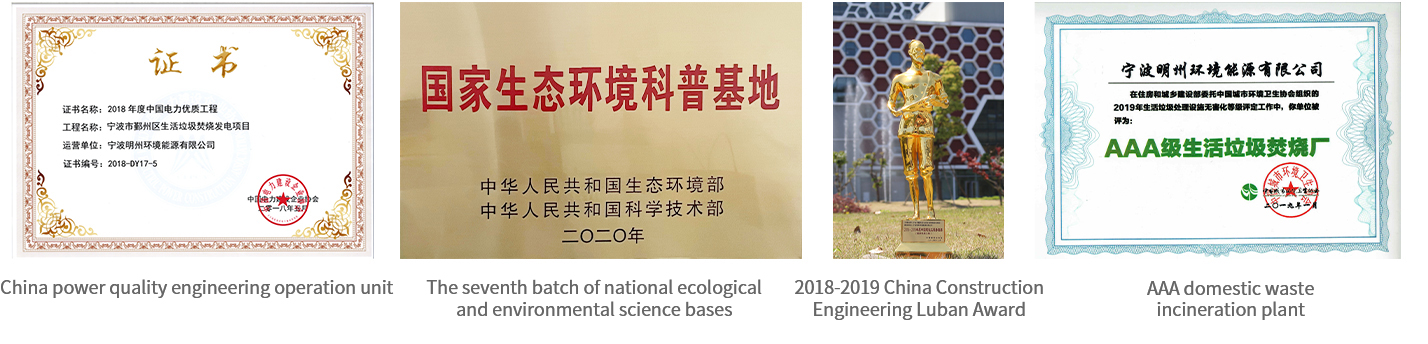
Ningbo project is the benchmark garbage incineration power generation project under Kangheng Environment, equipped with 3 sets of 750 tons mechanical grate furnace, 2 sets of 25 MW turbine generator sets, and flue gas, sewage, ash and other treatment systems. The Ningbo project is a pilot project for special industry-university-research cooperation between China and Austria under the National Key Research and Development Program.The Ningbo Project has obtained quality, environment, occupational health and safety management system certifications as well as domestic waste incineration plant operation service certification, and has been awarded the national AAA-level domestic waste incineration plant designation.
1. Low Carbon Emissions
The Ningbo Project is a pilot project under the China–Austria intergovernmental industry–academia–research cooperation program of China's National Key Research and Development Program.
In 2023, the project became the first waste-to-energy plant in China to install a real-time carbon emissions monitoring system integrated with an intelligent combustion system. After more than one year of commissioning and optimization, the system has been operating reliably. It achieves a monitoring accuracy of over 92% with data updates every five minutes, making it the industry's first high-precision, real-time online carbon emissions monitoring system. The intelligent combustion system is expected to improve boiler efficiency by 2.5%, significantly enhancing overall energy efficiency. The integrated application of these technologies has become one of the key solutions for improving efficiency, reducing pollution, and lowering carbon emissions in the waste-to-energy industry.
2. Ultra-Clean Emissions
The Ningbo Project adopts a seven-stage flue gas treatment process. Its flue gas emissions comply with standards that are stricter than both the Chinese national standard (GB 18485-2014) and the European Union Industrial Emissions Directive (2010/75/EU).
3. Intelligent Operation
The Ningbo Project is equipped with an Automatic Combustion Control (ACC) system, which minimizes fluctuations during the waste incineration process, improves operational stability, and significantly enhances both combustion efficiency and power generation efficiency.
4. Multi-Source Synergy
The Ningbo Municipal Solid Waste Treatment Center consists of the municipal waste-to-energy plant (this project), a food waste treatment plant, and a kitchen waste treatment plant. Following the principles of unified planning, unified site selection, and coordinated implementation, the three facilities share supporting infrastructure, including waste logistics, communications, water supply and drainage, and flood control systems.
Each facility performs its designated function while working together to process municipal solid waste generated in Ningbo's central urban area. Oversized residues produced by the food waste and kitchen waste treatment plants are transferred to the waste-to-energy plant for thermal treatment, enabling the recycling of materials and energy. This integrated treatment model improves resource recovery and enables Ningbo to achieve zero landfill for municipal solid waste.
1. Low Carbon Emissions
The Ningbo Project is a pilot project under the China–Austria intergovernmental industry–academia–research cooperation program of China's National Key Research and Development Program.
In 2023, the project became the first waste-to-energy plant in China to install a real-time carbon emissions monitoring system integrated with an intelligent combustion system. After more than one year of commissioning and optimization, the system has been operating reliably. It achieves a monitoring accuracy of over 92% with data updates every five minutes, making it the industry's first high-precision, real-time online carbon emissions monitoring system. The intelligent combustion system is expected to improve boiler efficiency by 2.5%, significantly enhancing overall energy efficiency. The integrated application of these technologies has become one of the key solutions for improving efficiency, reducing pollution, and lowering carbon emissions in the waste-to-energy industry.
2. Ultra-Clean Emissions
The Ningbo Project adopts a seven-stage flue gas treatment process. Its flue gas emissions comply with standards that are stricter than both the Chinese national standard (GB 18485-2014) and the European Union Industrial Emissions Directive (2010/75/EU).
3. Intelligent Operation
The Ningbo Project is equipped with an Automatic Combustion Control (ACC) system, which minimizes fluctuations during the waste incineration process, improves operational stability, and significantly enhances both combustion efficiency and power generation efficiency.
4. Multi-Source Synergy
The Ningbo Municipal Solid Waste Treatment Center consists of the municipal waste-to-energy plant (this project), a food waste treatment plant, and a kitchen waste treatment plant. Following the principles of unified planning, unified site selection, and coordinated implementation, the three facilities share supporting infrastructure, including waste logistics, communications, water supply and drainage, and flood control systems.
Each facility performs its designated function while working together to process municipal solid waste generated in Ningbo's central urban area. Oversized residues produced by the food waste and kitchen waste treatment plants are transferred to the waste-to-energy plant for thermal treatment, enabling the recycling of materials and energy. This integrated treatment model improves resource recovery and enables Ningbo to achieve zero landfill for municipal solid waste.
Copyright © 2025 上海康恒环境股份有限公司
All Rights Reserved. 沪ICP备12025497号-3

Scan the QR-Code to Follow our WeChat Official
Account to Get the Latest News